TWO HALVES OF ONE INSIGHT: HOW EXPLAIN X WORDNERDS TACKLED CUSTOMER CONVERSATIONS IN A NEW WAY
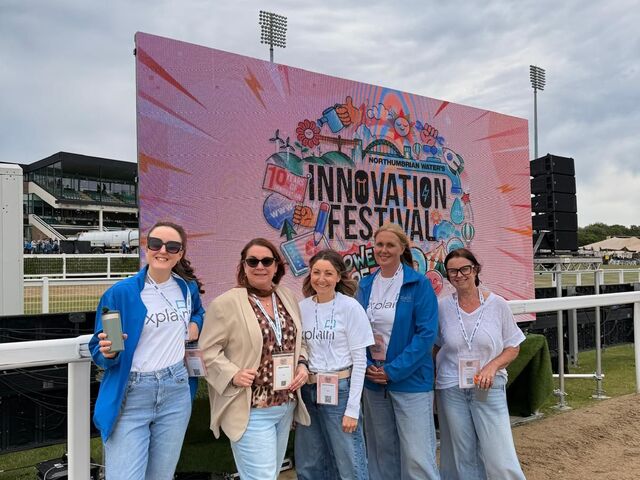
Every July, the Northumbrian Water Innovation Festival brings together organisations, customers and innovators to tackle some of the biggest challenges facing the utilities sector. This year, Explain led one of the festival's flagship design sprints, Fans for Life 2, working with h customers over four days to help shape Northumbrian Water's customer experience strategy for the next decade.
Bringing together the right people and creating the space for honest, meaningful conversations is what Explain does best. Through deliberative research, facilitated workshops and collaborative problem-solving over four days, those conversations generated 45 ideas for improving customer experience, which were refined into the five strongest recommendations to present to Northumbrian Water's leaders.
While every idea deserved to be heard, one important question remained - did the views of customers in the room reflect the experiences of Northumbrian Water's 4.5 million customers?
That's where our partnership with Wordnerds came in. Alongside the conversations taking place in the room, they analysed 26,119 pieces of existing customer feedback, helping us understand which themes were already being experienced more widely, where new opportunities were emerging and where further exploration was needed. Together, it meant we could combine the depth of primary research with the confidence that comes from testing ideas against customer feedback at scale.
While we focused on facilitating discussions and uncovering rich qualitative insight, each evening the Wordnerds team analysed 26,119 pieces of Northumbrian Water customer feedback, including complaints, satisfaction surveys and root-cause records from the previous 12 months.
Their sector-tuned AI models detected themes automatically across the full dataset, scored sentiment and segmented customers by behaviour, with themes co-designed in Northumbrian Water's own language as the quality-control layer on top. By the following morning, the themes emerging in the room had been tested against the experiences of thousands of customers across the region, giving everyone involved immediate confidence about which ideas reflected wider patterns and which represented entirely new opportunities.
One of the first findings reinforced something we often see in qualitative research, that the experiences customers remember most are rarely about process, they're about people. A Kano analysis of customer feedback showed that the moments creating genuine advocates were the human ones. We heard the story of one customer whose allotment had no water for a year during essential works. Northumbrian Water returned the allotment fully restored, complete with brand new greenhouses, to apologise for the disruption. What was remembered wasn't the forms that had to be filled in or the inconvenience, it was how the team made them feel.
Behavioural segmentation also challenged one of the biggest assumptions organisations can make, that there is such a thing as an "average customer". Analysis of thousands of records showed that around eight in ten customers were either under time pressure or worried about getting something wrong when they filled in a customer survey. That matters for how we design services and communications which are usually built for a confident, unhurried customer which will not work for the majority.
On the final day of the sprint, the group's recommendations were presented directly to a panel of Northumbrian Water's leaders, ensuring customer ideas entered strategic discussions immediately rather than becoming another report left on a shelf.
Kim Davis, CEO of Explain, said: "One of the most rewarding parts of the week was seeing leaders from Northumbrian Water sitting in the room, listening directly to customers as they presented their ideas. Too often, valuable insight is gathered, written into reports and never fully influences decision making. Seeing those conversations happen in real time, with the people responsible for shaping future customer strategy, demonstrated exactly how customer insight should work."
Perhaps the most valuable insight came from the ideas that weren't already visible in the data. Fourteen of the 45 ideas generated during the sprint had little or no evidence within existing customer feedback. Rather than dismissing them, they became a clear indication of where further primary research was needed.
Kim added, “What made this session different was the speed of the turnaround from the Wordnerds team. A session would end at five o'clock, and by nine the next morning the team had told us which of the room's ideas were already showing up across 26,000 customer records and which were new. That's not a normal research timescale. They were straightforward to work with, they explained how every theme was built rather than handing us a black box, and they were as interested in the questions the data couldn't answer as the ones it could."
The Innovation Festival demonstrated what is possible when different types of insight work together. Explain brings expertise in primary research, customer engagement and evidence-led facilitation and working with Wordnerds brought explainable AI that helped Northumbrian Water understand its existing customer feedback at scale. Through collaboration, the two organisations gave a richer, more complete understanding of customers and greater confidence that strategic decisions are grounded in both lived experience and robust evidence.
Wordnerds turns what customers say into what organisations do. Its explainable AI analyses customer feedback at scale for UK utilities, housing associations, transport operators and other regulated sectors, and delivers the insight natively into Power BI. Find out more about their work at wordnerds.ai
To speak to the Explain team about your next research project, email info@explainresearch.co.uk or call 0191 261 5261.